VALHEIM AVIATION / THE FLIGHT PLAN

From a sketch
to the skies.

Follow the crude flyer from its first concept to a playable Valheim aircraft—and the work still ahead for its first beta.

A development journal and a roadmap. Completed milestones tell the story so far; upcoming milestones describe the direction without promising release dates. Some systems were developed and refined alongside one another.

A JOURNEY IN FIELD NOTES

Follow the flight path.

Ten stops through the workshop. Open a field note for the details behind each milestone.

  1. Completed · Before alpha

    An idea takes shape

    Before alpha

    A bare-bones flying machine built around timber, stretched fabric and a rough little engine. The aim: flight that feels handmade, vulnerable and at home in Valheim.
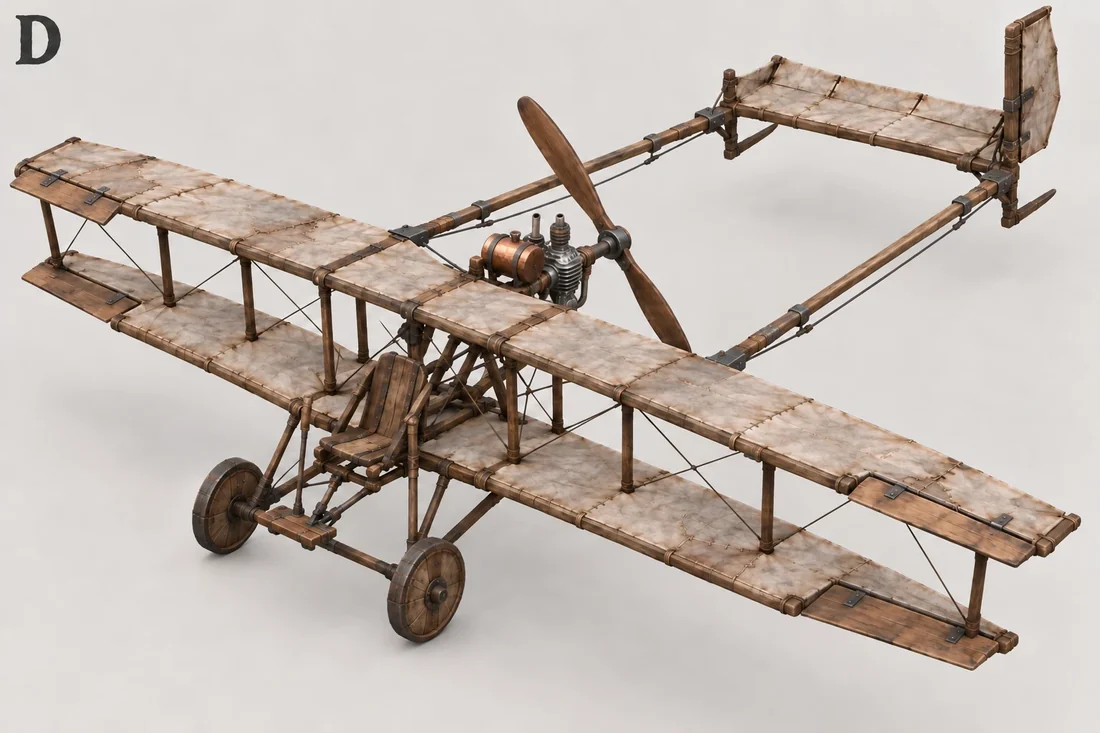
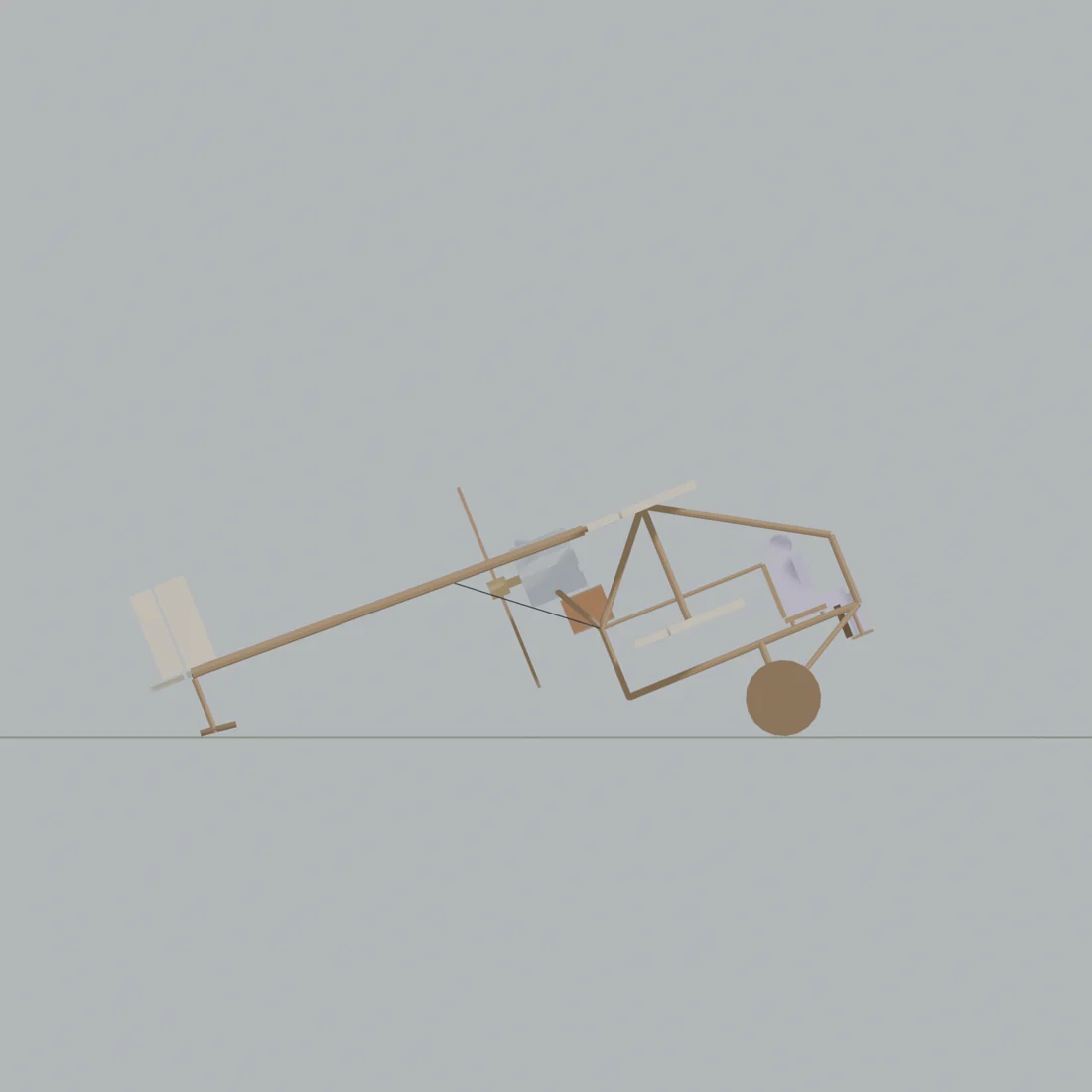
    Concept illustration of a timber-and-fabric aircraft
    Concept art — visual direction, not the finished in-game model.
    Open the field note

    The first concept established the aircraft’s character: exposed bracing, an open pilot’s seat, a pusher propeller and an unusual tail. The wider vision included its limitations and eventual crafting progression. This first flyer would offer a modest way into aviation, leaving room for more capable aircraft later. The crafting vision was planned here; it was not yet implemented.
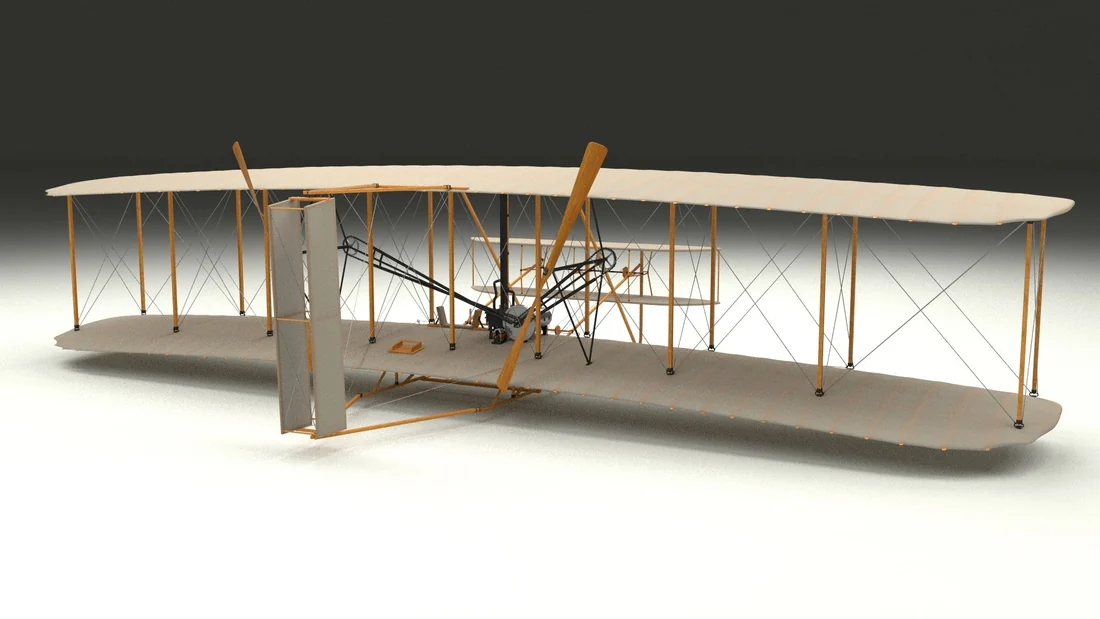
    Early biplane reference with exposed wing bracing
    Early aviation reference study.
  2. Completed · Before alpha

    From drawing to a working prototype

    Before alpha

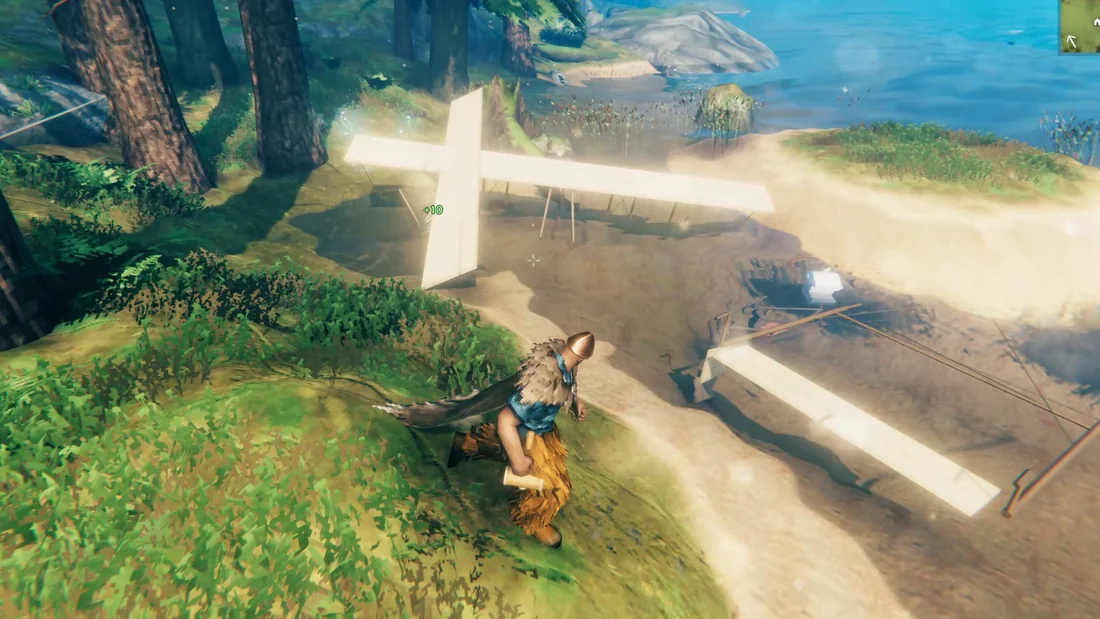
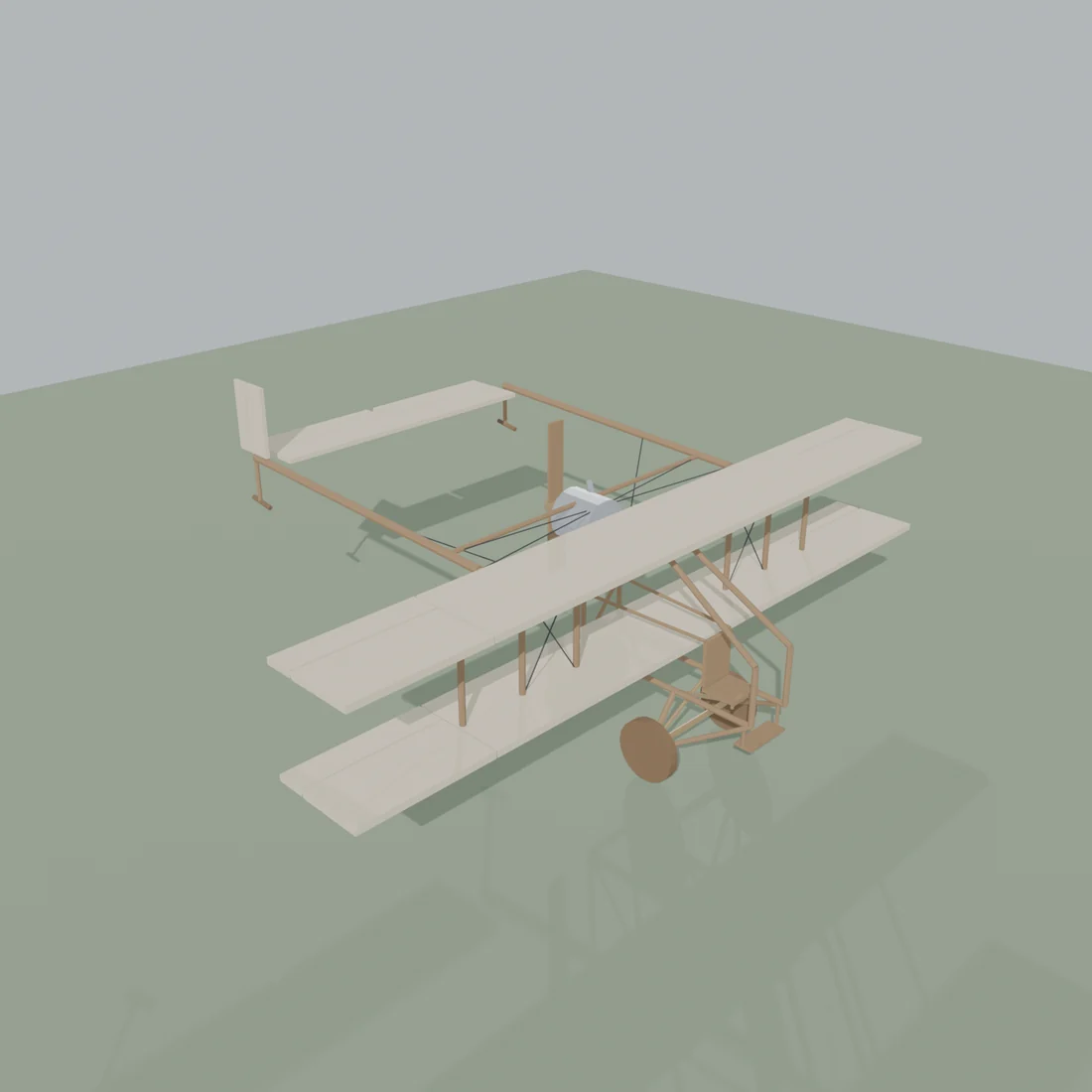
    The illustration became a Blender blockout, then made its first appearance in Valheim. Getting it into the game was only the beginning.

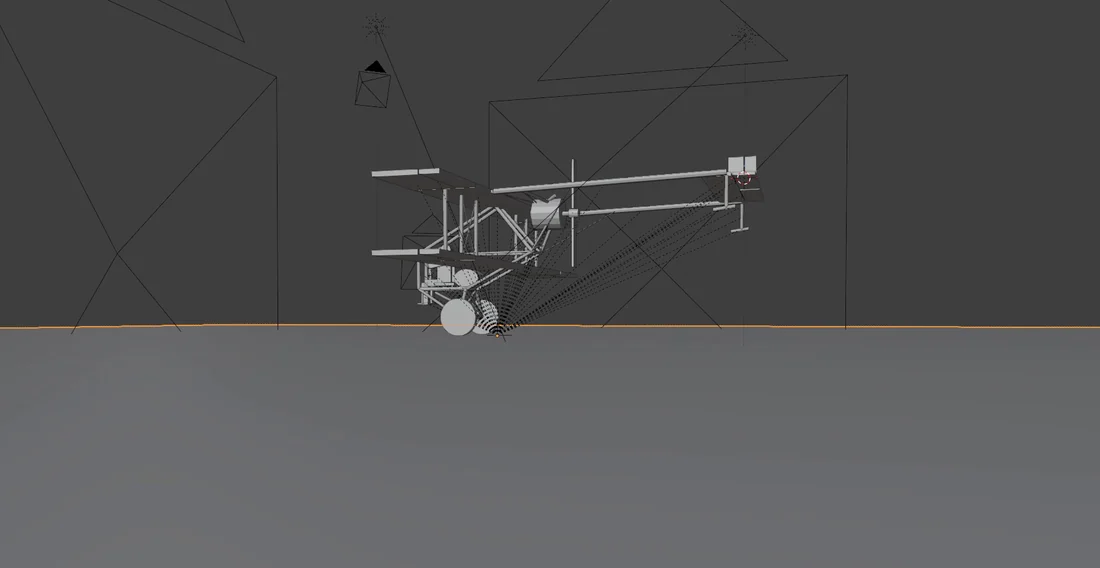
    Perspective study of the Blender aircraft blockout
    Blender blockout — perspective study.
    Open the field note

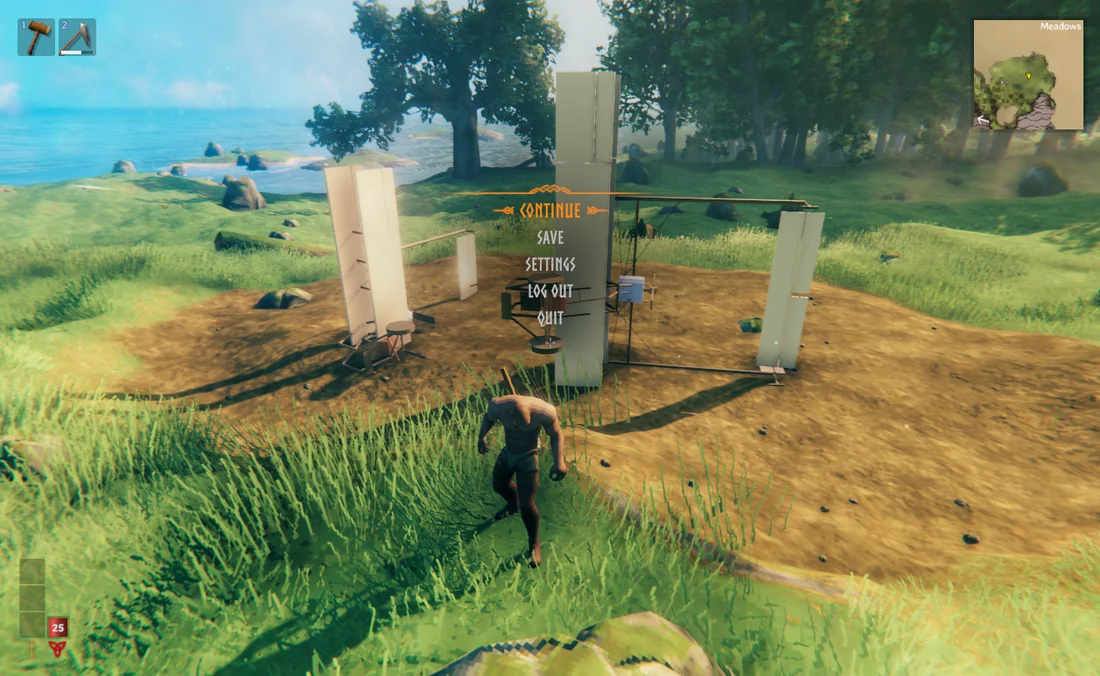
    Wing proportions, tail runners, cockpit clearance and the undercarriage went through repeated adjustments. Hands-on edits helped shape the footrest, seat support and fuel-tank position. The model then travelled through Unity into Valheim, where its orientation, colliders and pilot attachment needed attention. Early versions were static; adding gravity and ground contact let the craft fall, bounce and settle into its taildragger stance. The first seated pilot even ended up above the cockpit before the seating position was corrected.

    Side view of the Blender aircraft blockout
    Blockout side study.
    Aircraft blockout in the Blender workspace
    From the Blender workbench.
    First in-game spawn of the aircraft blockout
    First spawn of the Blender model in Valheim.
    A fresh render of the supplied blockout model. Press play to rotate; pause at any angle.
  3. Completed foundation · Tuned throughout development

    Earning the first flight

    Before alpha

    Taxiing, lifting off, climbing and landing became a working flight loop through repeated tests—and plenty of crashes.

    Prototype biplane in flight above Valheim
    Alpha flight screenshot — illustrating the flight foundation, not the first flight.
    Open the field note

    Early builds struggled to leave a long runway. Later builds lifted off too easily, climbed poorly or felt reluctant to respond. Throttle rundown, steering, pitch, stalls and ground handling were refined until a full circuit and return landing felt convincing. A custom “black box” recorded flight conditions and aircraft behaviour so changes could be judged against evidence as well as feel. It became an important tool for understanding what happened between takeoff and impact.

    The target is an approachable, bare-bones flight simulation within Valheim—not a claim of a fully realistic aircraft simulator.

  4. Completed foundation · Before alpha

    Meeting the sea and the weather

    Before alpha

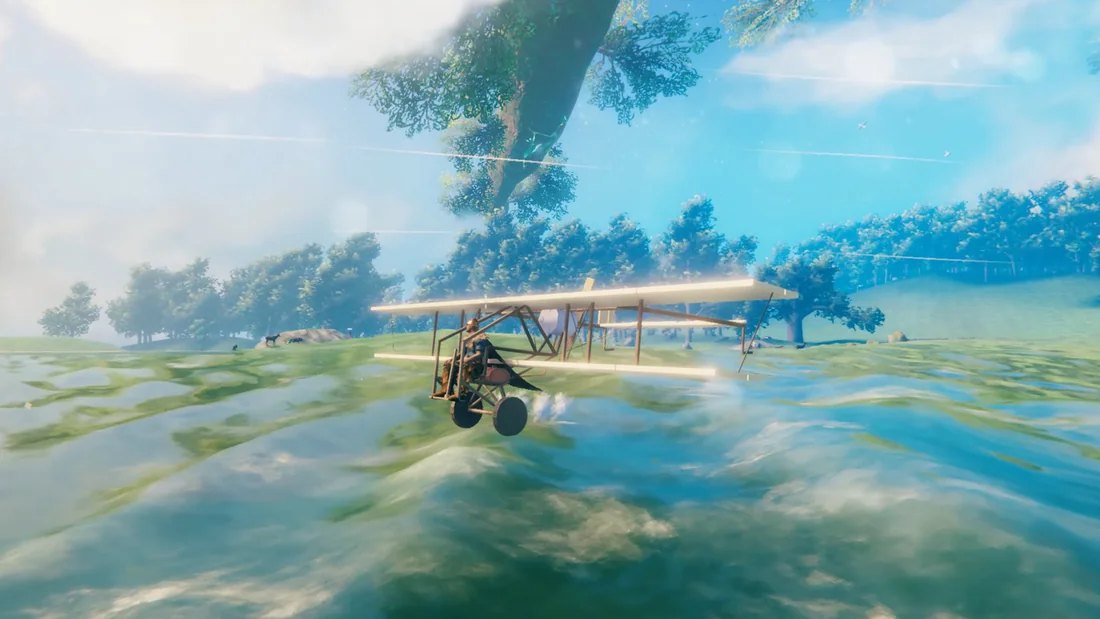
    Water became something the aircraft could skim, strike and sink into. Wind became something the pilot had to respect.

    Aircraft skimming water with spray behind it
    Water contact in the alpha build.
    Open the field note

    Early water contact could stop the craft before it visibly touched the surface, or feel excessively sticky when only a wheel dipped in. This was refined toward lighter skimming contact and stronger resistance as more of the aircraft entered the water. Buoyancy and gradual sinking gave the pilot more opportunity to escape, alongside repeated work on safe exits from tilted and overturned wrecks.

    Weather was tuned separately: calm conditions suited flying, while strong winds brought drift and disturbances to roll and pitch. Storm flying became a challenge rather than simply a sideways push.

  5. Completed foundation · Before alpha

    Giving the engine a voice—and a thirst

    Before alpha

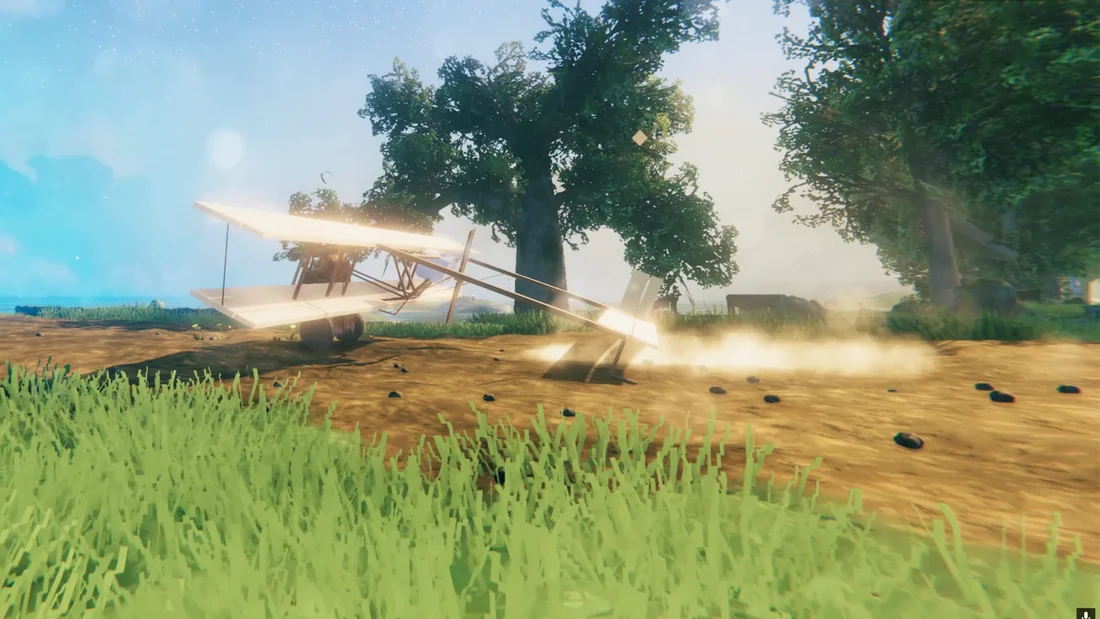
    A popping engine, manual start and shutdown, and a tank of spirits gave the crude flyer its own rhythm.

    Biplane on a runway with the propeller running
    The engine running in the alpha build.
    Open the field note

    Custom idle, medium and high engine loops were blended to follow engine speed, with a startup sound to bring it to life. Exhaust was positioned at the pipe and later made responsive to wind. Fuel introduced another practical limit: a full tank provides roughly ten minutes at full throttle or sixteen minutes at idle under the current tuning.

    The tank reports its fullness when inspected. Refuelling uses spirits with temporary artwork while the final item and crafting path are developed. Refuelling sounds were added and tuned; a more deliberate filling interaction remains planned. A separate propeller sound is also still to come.

  6. Completed foundation · Before alpha

    A machine that touches the world

    Before alpha

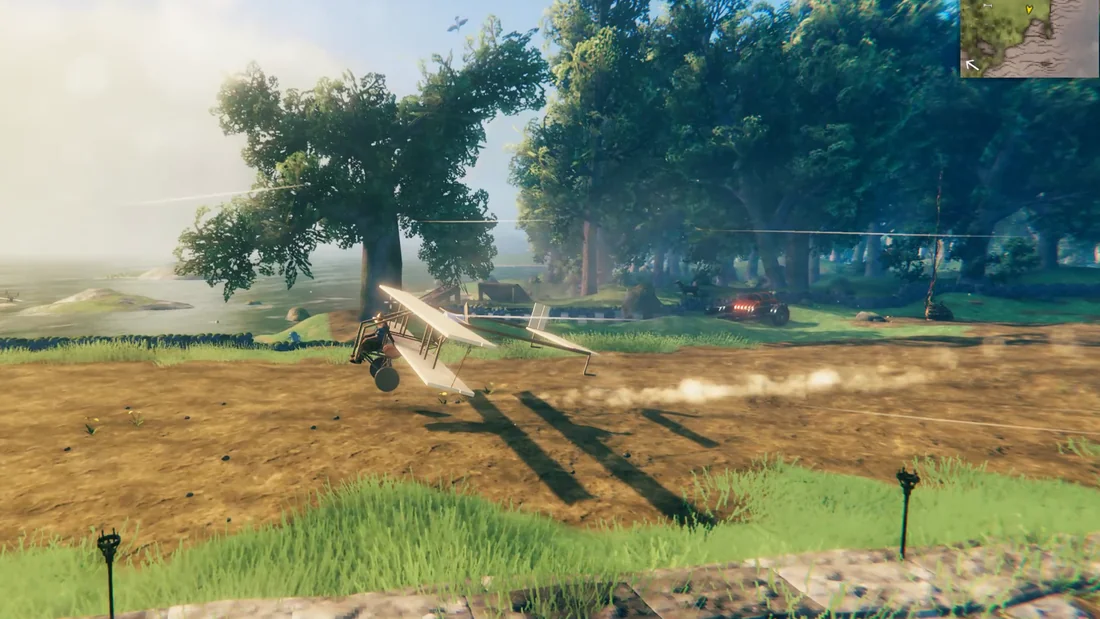
    Wheels leave dust, water contact leaves spray and foam, and a destroyed aircraft breaks into parts.

    Character beside broken aircraft parts
    Breakup in the alpha build.
    Open the field note

    Ground effects went through several passes to replace tight, floating puffs with dust that rises from the surface and trails behind the craft. Wheels and tail runners gained their own trails, with stronger propeller wash over dry dirt and reduced dust on harder surfaces. Rain suppresses dust.

    Suitable native Valheim effects and sounds were reused for impacts, water contact and repair. Aircraft health, hammer repairs and physical breakup made damage more readable. Rain and sustained submersion introduced gradual deterioration, giving shelter a purpose and preventing deep-water wrecks from accumulating forever. Persistence work allowed parked aircraft and their fuel and health to survive relogging and travel away from the area.

    Breakup is currently a visual destruction effect. Recoverable crafting materials and components are a future step.

    Biplane with dust trailing over a runway
    Ground contact and dust in the alpha build.
    Aircraft creating spray while skimming water
    Water contact in the alpha build.
  7. Released · Alpha 0.1.0

    The first public alpha

    The crude flyer became available on Thunderstore: a playable single-player prototype ready for others to explore.

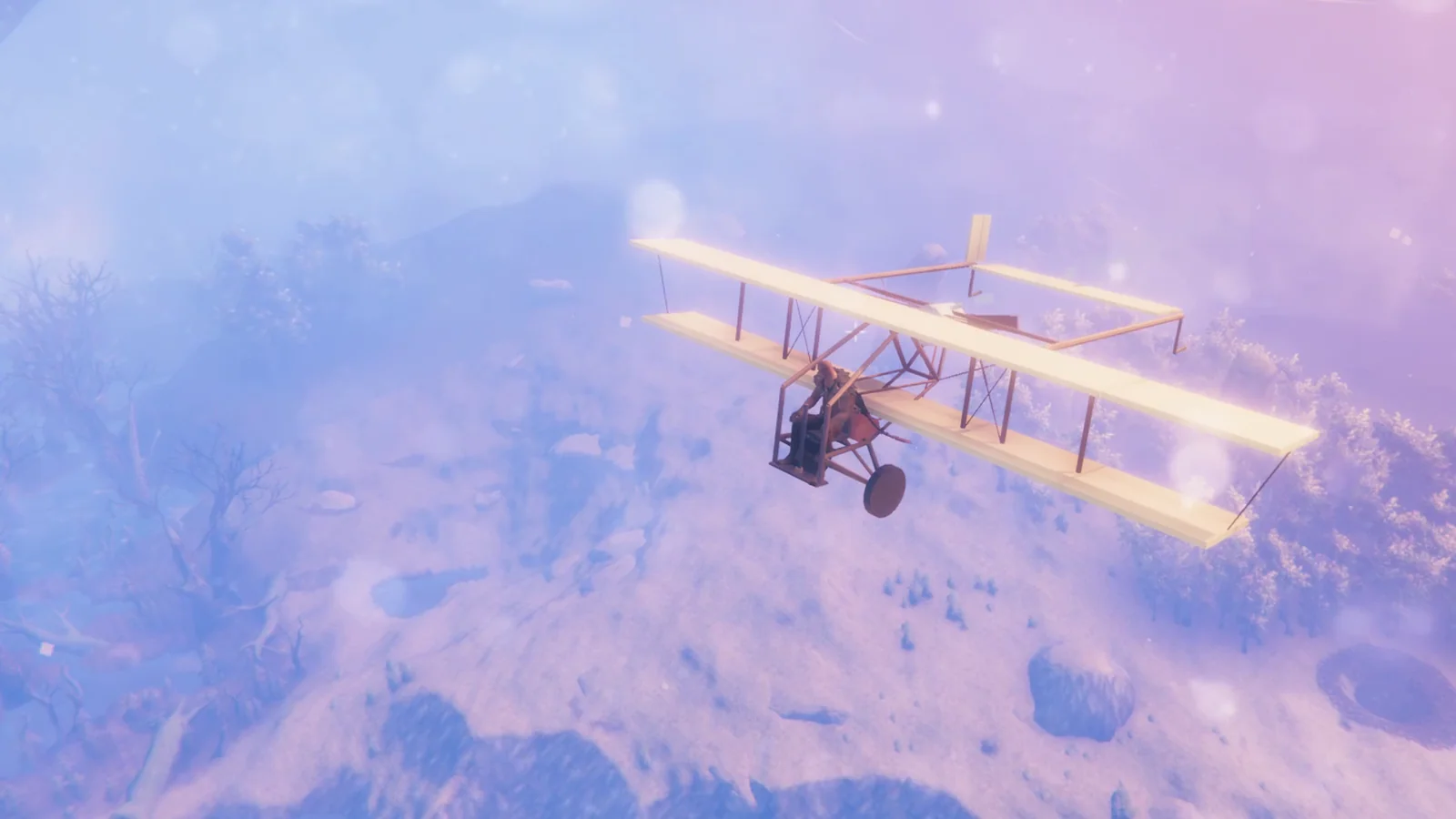
    Alpha biplane flying above a misty Valheim landscape
    The public alpha — a real in-game flight screenshot.
    Open the field note

    The alpha brought together flight, wind, fuel, engine sound, damage, repair, water interaction, persistence and aircraft breakup. It uses prototype artwork and console spawning. Finished models and the survival crafting progression were deliberately left for the next stage.

    The release opened the workshop to player feedback while development continued toward the wider vision.

    Download & release notes ↗

    Share feedback on an Aviation video ↗

  8. Planned · Required for first beta

    Building the finished crude flyer

    Date to be announced

    Replace the blockout with a finished aircraft and give every major part a place in Valheim’s crafting progression.

    PLANNED / New field notes to come

    Open the field note

    The accepted silhouette and cockpit layout provide the starting point for detailed timber, fabric, fittings and textures. The aim is to retain the crude, handmade character while making its construction readable up close.

    Crafting will need a coherent path for the airframe, engine, fuel tank, exhaust and propeller, together with the spirits that power it. Recipes, ingredients, crafting stations and progression requirements still need to be designed and balanced. Repairs, destruction and eventual recovery of materials or components should fit that same system.

    These are planned systems, not promises of specific recipes or unlock tiers. Salvage scope should be confirmed before listing it as a first-beta requirement.

  9. Planned · Date to be announced

    The first beta

    Date to be announced

    A finished crude flyer that players can work toward, craft and use as part of their survival world.

    PLANNED / New field notes to come

    Open the field note

    The first beta milestone comes after the finished aircraft model and core crafting paths are in place, followed by testing of progression, fuel, repairs, persistence and destruction together. Flight and damage balancing will continue to benefit from alpha feedback.

    This is the next substantial release target, not the end of development. More ambitious aircraft and workshop additions can follow once the crude flyer has a dependable foundation. Multiplayer is not included in this promise.

The trail continues.

Back to Valheim Aviation →